How to Help Your Chickens Through A Molt
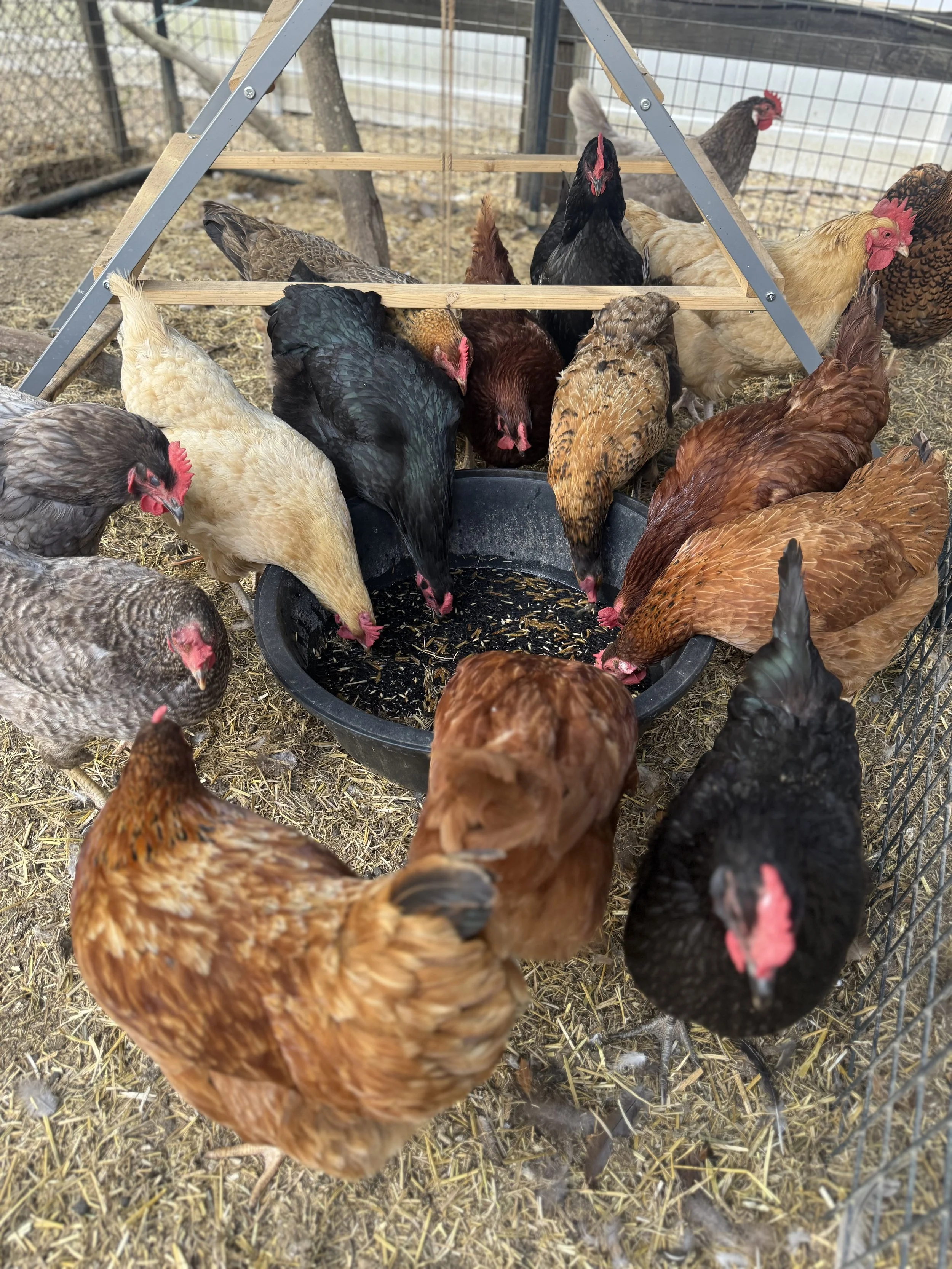
How do we help our girls through their molts?
Every night, after the girls have been put back in their secured run, we give them soaked organic ancient scratch grains, black oil sunflower seeds, and freeze dried meal worms. This "snack" is packed with protein and healthy fats to give the girls the energy they need to make new feathers, and get their bodies ready for the cold weather that will be here before we know it. They are obsessed with this recipe and we've seen an increase in egg production with it even during the hardest stages of their molt.
Remember, make sure layer feed is 90% of your hen's diet. If you have roosters, they should not ever eat layer feed as the calcium will wreck their kidneys. In that case, when your hens would be eating flock feed (much lower calcium percentage), you can increase the calcium snacks (like oyster shells or feeding them crushed egg shells) and protein a little more during a molt.
Molting Season
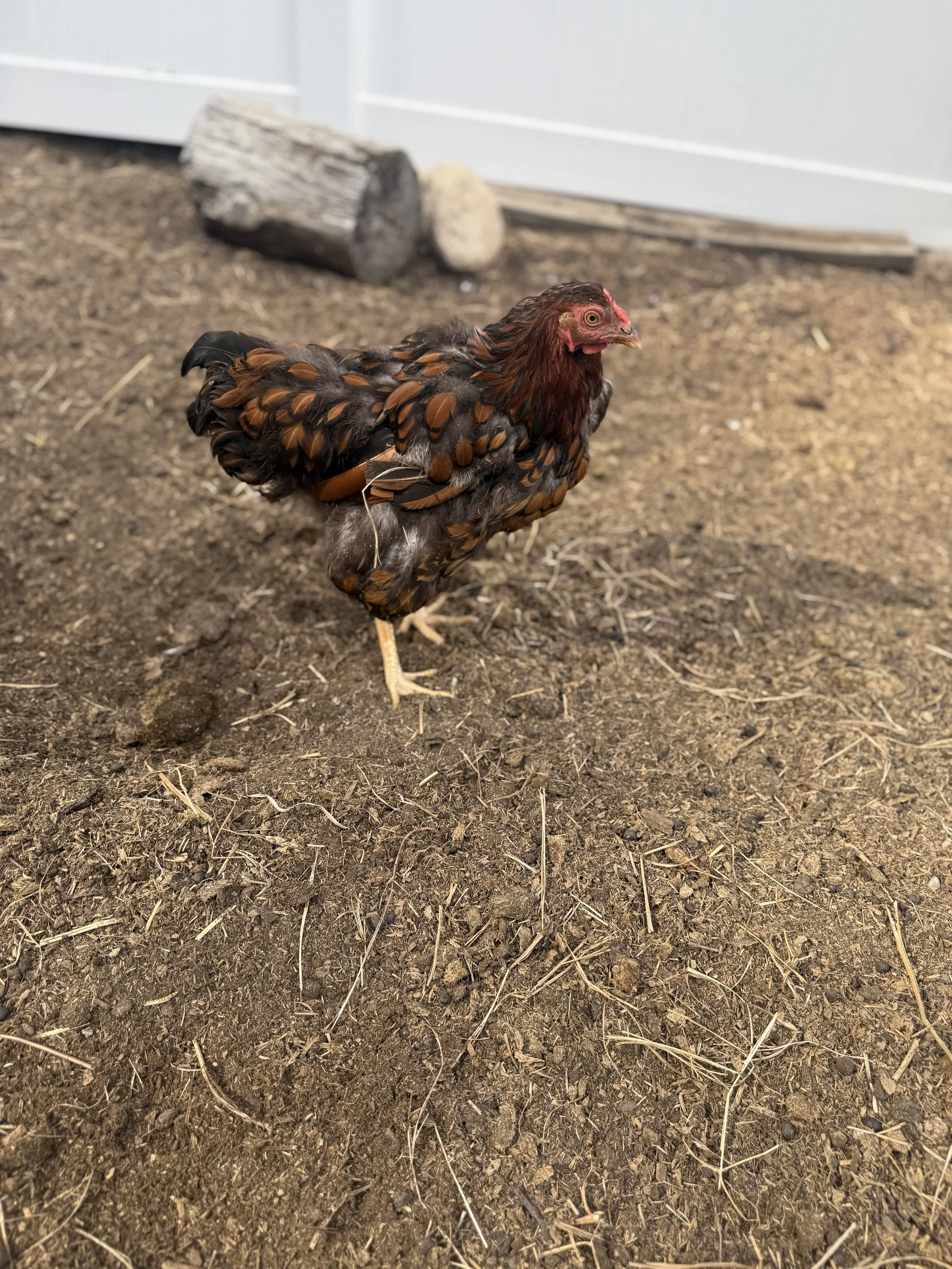
Oof some of the hens are starting to look rough
You know what time it is? Less daylight, cooler temps?
It’s molting season!!!
Fear not, this is a completely natural and healthy part of the chicken life cycle. Every end of summer/early autumn, chickens start their seasonal molt. A few of our girls look WRECKED during this time, like something plucked all their feathers off at once, whereas others you can barely tell. Regardless ,they’re all molting in some capacity or another.
This process is important for prepping their bodies for the cold weather seasons. New and thicker feathers emerge just in time for a significant dip in overnight temps, but this process takes a lot out of the chickens.
To help your flock through their molt, increase their protein intake with treats like mealworms or black oil sunflower seeds (our flock favorite). Make sure treats don’t exceed 10% of their diet.
Also make sure they have continual access to fresh, clean water. Monitor for anyone having issues with pin feathers (the hard comb feathers emerge from) and check daily for any skin issues like mites or lice.
Coop cleanliness and managing all the loose feathers can be challenging during this time, but ultimately it will help your chickens feel better more quickly. Don’t be surprised if egg production slows or even stops during this period, it is a very challenging and demanding season on the birds!
We usually get close to 2 dozen eggs a day but during a molt season that drops to around 6-8 eggs a day instead. A molt doesn’t last too long, usually 2 months or so depending on the individual, but the more support you’re able to provide your flock the easier it’ll be on everyone.
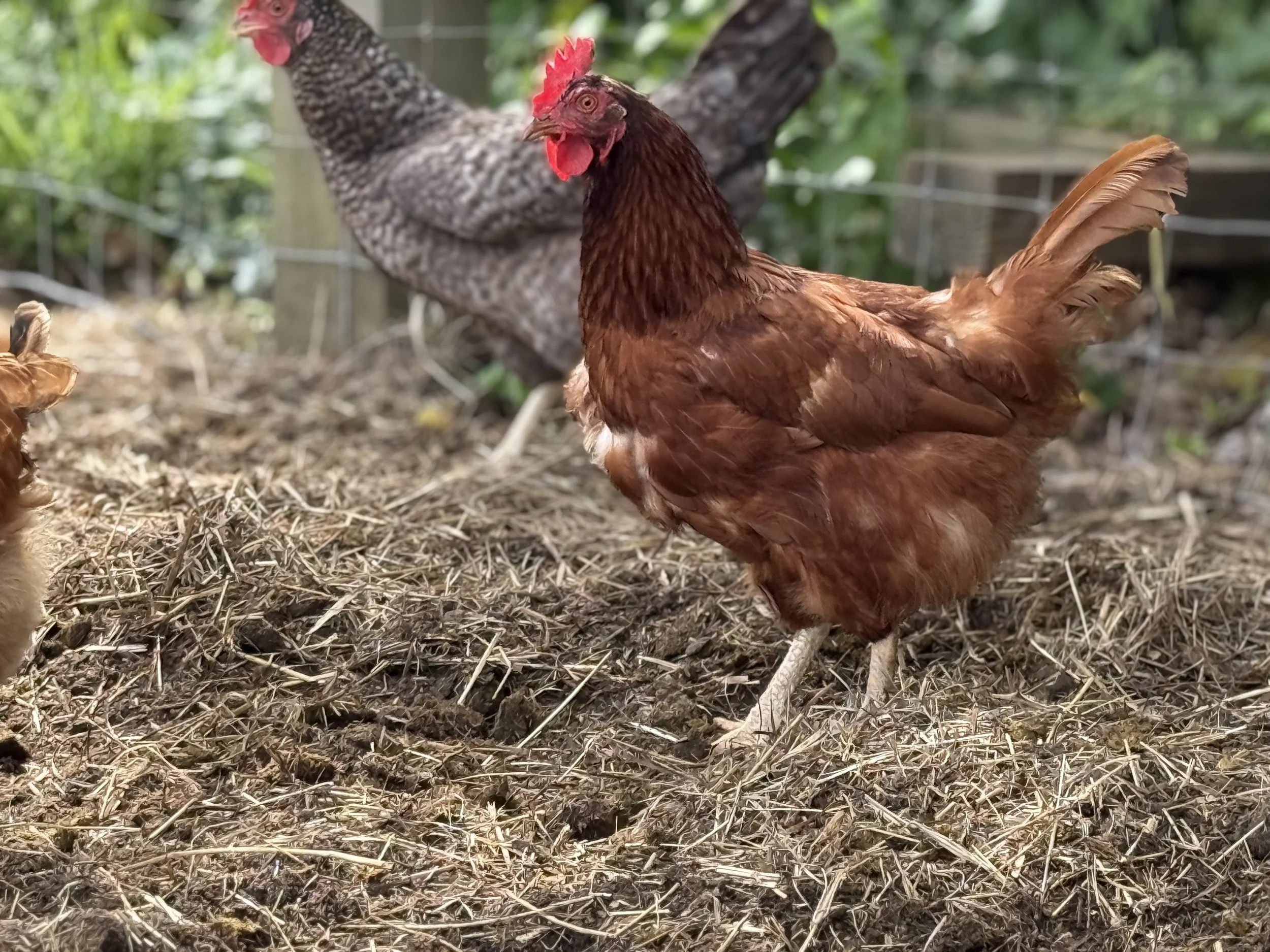
How to Help Your Chickens Stay Parasite Free With Herbs and Spices
Did you know that chickens can also have worm issues and other parasites? To help combat this issue, we use Roosty’s organic chicken dewormer every day for our hens. Not only does it keep them worm and parasite free, but it also acts as an immune booster and it keeps other animals away from their food due to the high spice content.

We do have a yearly vet check on our flock to check for any parasites or worms that could become resistant, but so far, this method works amazingly well and it smells great! As I’ve said before, we do not use any medication unless absolutely necessary, especially antibiotics, antifungal or anti-parasitic drugs due to the resistance that can quickly occur with misuse and overuse.
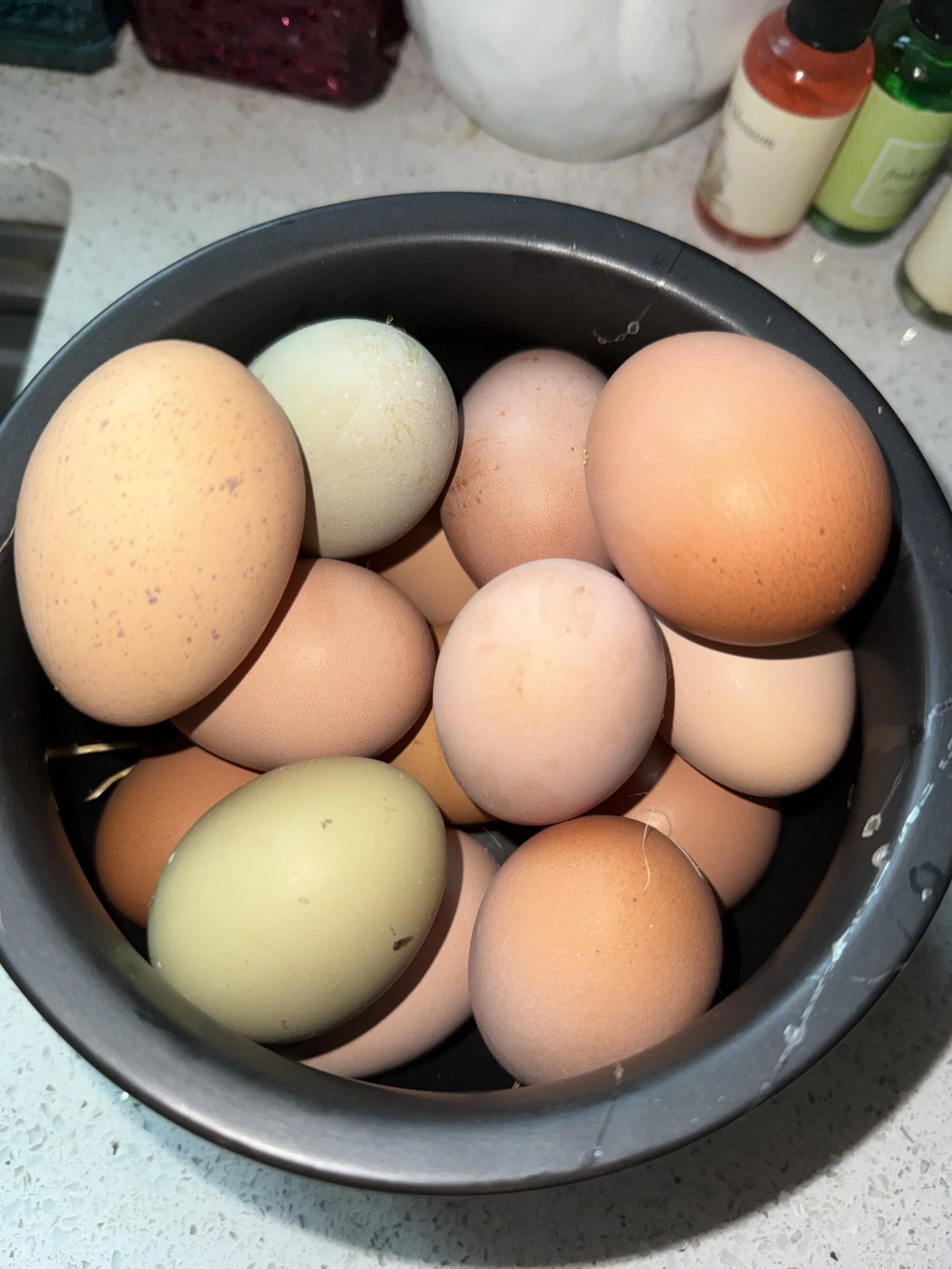
The girls lay close to 2 dozen eggs a day, and they’re all coming out clean, extra large, and have gorgeous orange and dark yellow yolks.
Once you start eating farm fresh organic eggs you just can’t go back! Support your local farmer and please don’t buy from large scale factory farms. Not only are the eggs much lower quality but the hens are treated horrifically.
Things to Consider About chickens

I want to share this post I made on Facebook a few months ago again. This information is so important and we’ve already been asked for a lot of help by new chicken owners who feel overwhelmed and over their heads this year. We are ALWAYS happy to help but please read this information , especially new or potential chicken owners.
To everyone thinking of getting chicks this year due to the egg shortage, please be aware of a few crucial things before buying chicks.
Not all places allow you to have chickens. Before you run to the store or order online, please check your neighborhood regulations and make sure you can have chickens
Hens take anywhere from 4-6 months to mature enough to lay eggs. They won’t be consistent for a few weeks after they start laying
Chickens are an investment. You’ll spend $50-200 on chicks alone (depending on where you get them and the breed) then another $500-3000 on a solid coop and run with enough space and protection from predators and the elements and then another $40-60 a month in food. That’s not counting any medications, supplements, or extra treats. That’s just basic food.
Not every chicken breed is good for every location. You have to research your zone and what breeds are the best. Many states require a certain amount of hens to be bought at the same time. In MA it’s usually a minimum of 6.
Chickens live anywhere from 3-8 years on average. Do you have a plan for your older hens or if you move?
If you accidentally get a rooster, do you know of somewhere safe he can go to live out his life? If you’re allowed roosters in your town, do you have a plan to keep him quiet at night?
Chickens get sick and hurt. They need proper vet care and maintenance. Do you have the time and funds to provide proper care?
Chickens are astoundingly smart and sensitive animals. They’re also one of the most abused farm animals in the history of human existence. They memorize faces, voices, and have their own specific sounds for their caretakers. They eat ticks and grubs, they help with compost, and they’re extremely loving creatures. They need to have friends and space to run around and explore.
I am ALL about food and self sustainability. I would love if everyone had a garden and chickens and farm animals. If people were more aware of how hard farmers work and where their food came from, we’d have a lot healthier people and a much more sustainable environment. But please, before jumping head first into it, research and ask questions. Be prepared instead of caught off guard.
Support your local and small farmers. Please. Buy local and learn how hard agricultural families work.
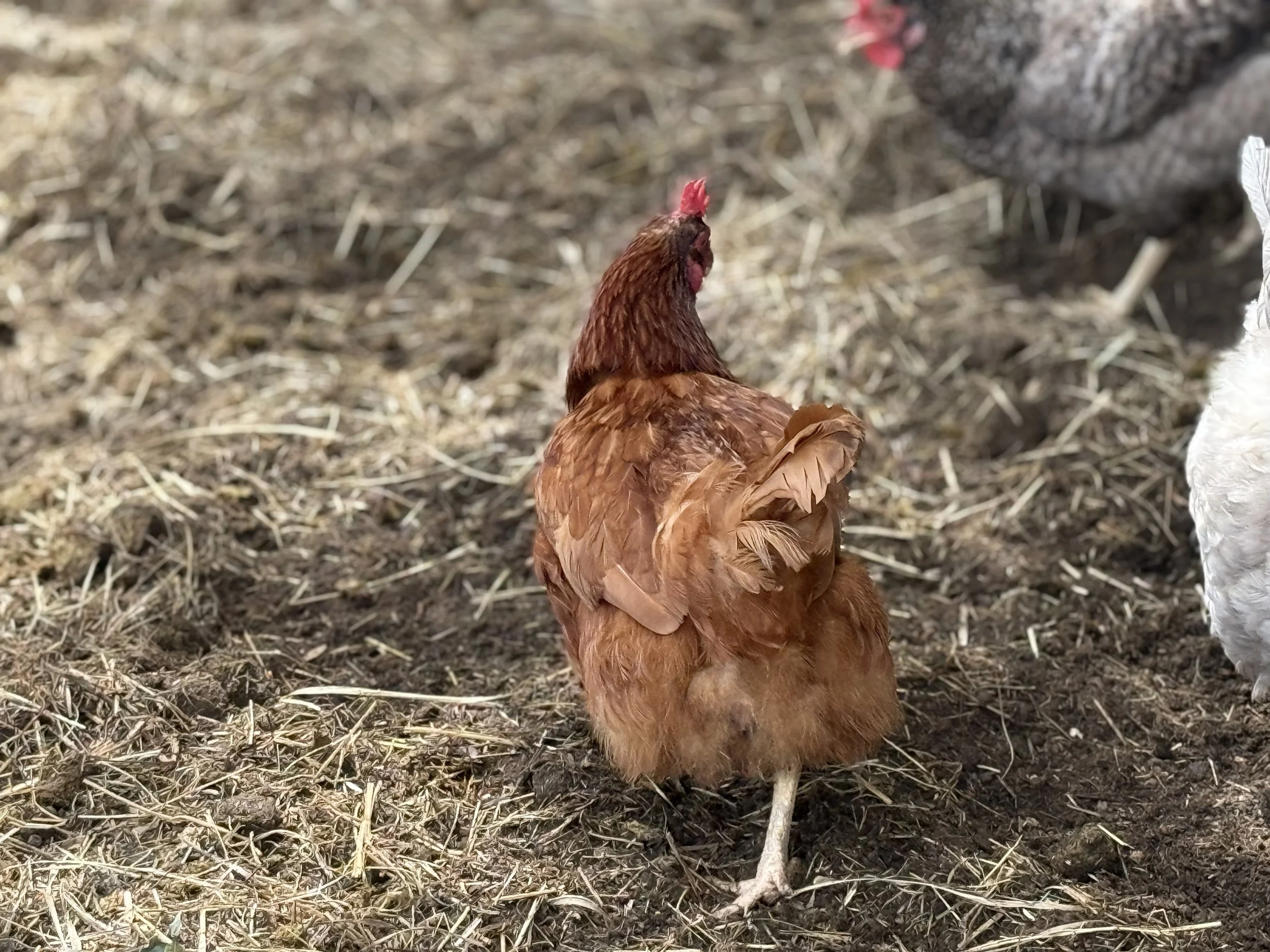
Chickens: What to consider before getting chicks
I’ve owned birds since I was a child. I adore birds of all kinds. I had macaws and lovebirds growing up, and my parents had parakeets, sun conures, and finches before I was born. I’d wanted chickens for years, and when we moved to a place where we could start a flock, I was so excited to get going. That being said, even with having a good deal of bird knowledge, chickens are still a lot to learn.
Most people bring home spring chicks from farm stores like Tractor Supply or order online from various hatcheries. Personally, I highly recommend getting chicks from either someone you know who breeds healthy birds, or ordering from a highly respected hatchery. The hens we’ve gotten from our local farm store come from a very reliable hatchery have been extremely healthy and laid eggs year round, even in the coldest winter months.
One major thing to consider for your chicks is whether or not you’re going to vaccinate them against Marek’s disease. Marek’s vaccination has to be done at the time of hatching or within a few hours after chicks have hatched. We now only get chicks that have been vaccinated. Marek’s is a horrid disease and it is a slow and painful death for chickens affected by it. There is no cure for it either. Of all the poultry diseases that exist, this one is at least preventable from day one if you have vaccinated chicks.
Chicken math is REAL. You can say you only want to start off with 6 hens and then two years later you’re up to a flock of 50. It happens to everyone because there’s so many beautiful chicken breeds and egg colors out there. If you have a rooster in your flock, you’ll definitely get some spring chicks if you aren’t diligent about taking eggs out of the coop every day. Last spring I forgot to get eggs for two days and that was enough for the embryos to begin developing and we had 8 new babies born a few weeks later.
While it would be amazing to just get as many chickens as you want every year, it’s not usually feasible for most people. You must take into account the space you have available, the coop size, and their roaming space. Of course if you live on 20 acres and can fence off the entire space, then you can have 100+ chickens and never have an issue with running out of room, but for most people, anything over 12 starts to become a little crowded. Our chicken coop is very large and easily holds up to 40 hens. We’ve also got a large, fenced off space that they can roam in addition to their fully secured runs that they use when the weather isn’t excellent. To be considered “free range” your hens need a minimum of 100 square feet per hen.
Before you even look at a coop, a run, or fencing, check your zoning laws in your town and call your Board of Health to determine if you’re a) even allowed to have chickens b) required to get a permit to have chickens c) allowed to have roosters or required to keep under a certain amount of hens. The building department will also likely have regulations on where you can place a coop, and how far it must be from any of your neighbors. Some towns even have building requirements for the coop construction itself, so it’s always best to ask before spending the money constructing something to just be told you can’t even use it.
Now, let’s assume that your town has given you the okay to get chickens, and you’re looking to get your set up ready for when they’re a bit larger than chicks. Ideally, a chick will be fully feathered by 5-6 weeks of age and able to live outside full time. That said, it is definitely best practice to have their coop at least picked out and ready to go before you bring those chicks home. 5 weeks goes by really quickly and they will outgrow their nursery brooder set up very very fast.
We currently have an XL elevated coop that has three attached runs. We have multiple of these metal runs from Tractor Supply. We use them for the goats and for the chickens because they’re secure, easy to change the shape of, and easy to build.
https://www.tractorsupply.com/tsc/product/producers-pride-universal-poultry-pen-8-ft-x-8-ft-cr0808-1333983?store=1762&cid=Google-Shopping-Sustain&utm_medium=Google&utm_source=Shopping&utm_content=Sustain&gad_source=1&gbraid=0AAAAADnTm23gitDN6YTtdopqJLQ-W0hiO&gclid=Cj0KCQiAwtu9BhC8ARIsAI9JHalNF5UY30Oq0mLBOaisz8TUCY8trckEje2JtpH88z1y7CflzlUzHEEaAj0kEALw_wcB
When you’re building your coop, experienced chicken people will tell you to invest in it. In an ideal world, everyone would hire a professional carpenter to build a strong coop that will last, but so long as you’re making sure the coop is non drafty, has ventilation (windows are great for the summer), and has perches and nesting boxes, you’re pretty okay. That being said, you need to make sure it is extremely secure, especially against things digging under the coop and run to access the chickens and eggs. In our area, the biggest threat to chickens are dogs, foxes, fisher cats, and raccoons. Further north people are more worried about bears so they will also secure their chicken areas with electric fencing. Please research the predators in your area to make sure you’re thinking of each one before you place your chickens in their new home.
Chickens are susceptible to a multitude of diseases. Due to their unique anatomy and being bred to have eggs almost daily, there are a lot of organs to learn and a lot of functions to be aware of. The most common diseases are often preventable, such as bird flu, bronchitis, coccidiosis, impacted crop, pyometra (inflammation of the uterus), renal failure (sometimes preventable but very common in heavy egg laying breeds), and fowl pox. Vaccination, continuous cleaning of the coop and runs, fresh water, and high quality food and vitamins can help prevent many of these diseases with high efficacy. (We will do another post on nutrition and vitamin supplementation). As always, get a chicken vet BEFORE you get the chickens.
There are many good chicken raising groups on Facebook that are usually a wealth of knowledge. A good friend of mine always suggest that everyone who wants to get chickens join one of these groups and read every post for a few months. You’ll learn basic and advanced chicken skills from people going through it in real time.
Our next blog post will be about setting up a brooder system for your new chicks, stay tuned!